From market stall to public spectacle
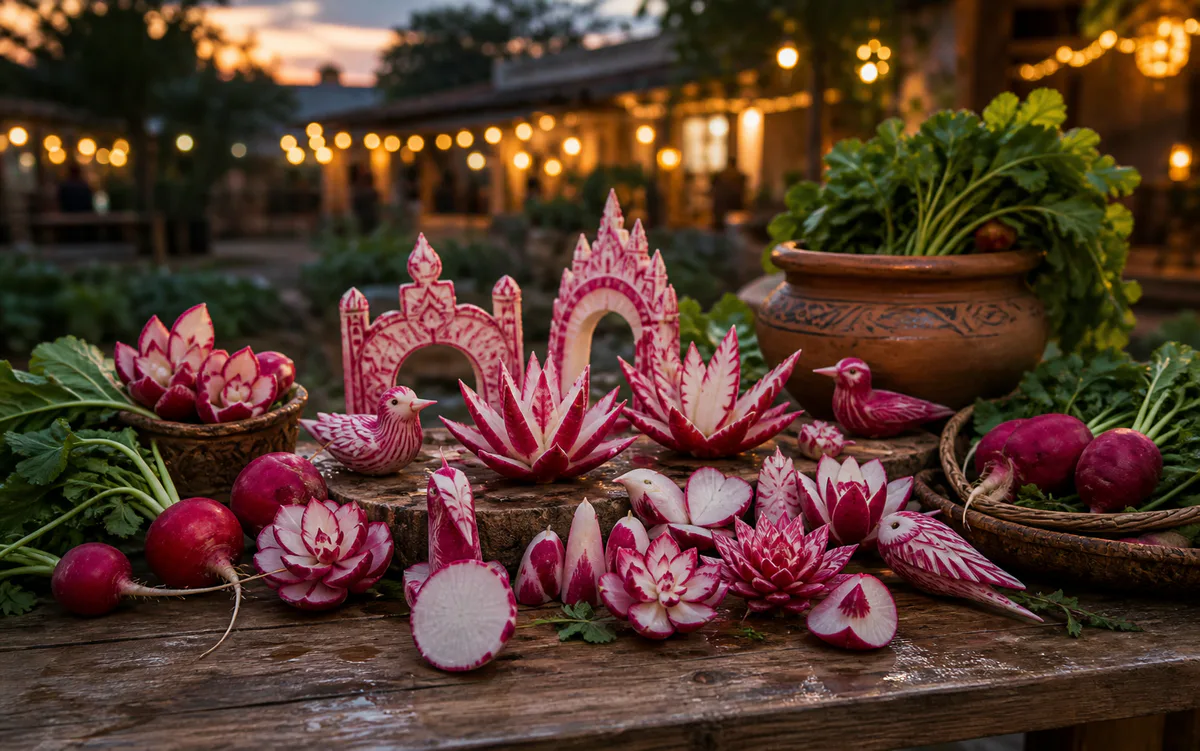
The tradition grew from vendors carving produce to attract attention before Christmas. What began as display became competition, and the forms grew increasingly elaborate.
Artists now create scenes inspired by local life, religious stories, animals, architecture, and imagination. The red skin and white interior give every cut a vivid graphic contrast.
Art designed to disappear
A carved radish dries quickly. The material sets a strict clock, so much of the work happens close to the event and cannot be preserved in the usual way.
That fragility changes how people look. Visitors know the display belongs to a single night, making attention feel communal and immediate.
Why temporary traditions endure
The festival survives not because its objects last, but because the skills, stories, and anticipation return. Families and makers carry the form from one year to the next.
Its lesson is simple: permanence is not the only measure of cultural value. Sometimes repetition, memory, and a crowded square are enough.